Wadi mhiri
“Five sacred moments of the day that bind the faithful to the heavens. Unique moments of purifying the body through ablutions, then through prayer, to raise the spirit to the highest spiritual ranks and free it from the human condition, which wavers between the dark side and the light.
At the hour of prayer, recitations of the texts and supplications follow one another. The sky lights up with the final bows, signs of total communion with God.
Not far off, the devil rages in the hearts of many and dares, with his claws, to sever these sacred threads. Worse still, he sets himself up as the sole messenger between God and ordinary mortals, claiming to hold the absolute truth and seeking to impose, through massacres, his distorted vision of religion.
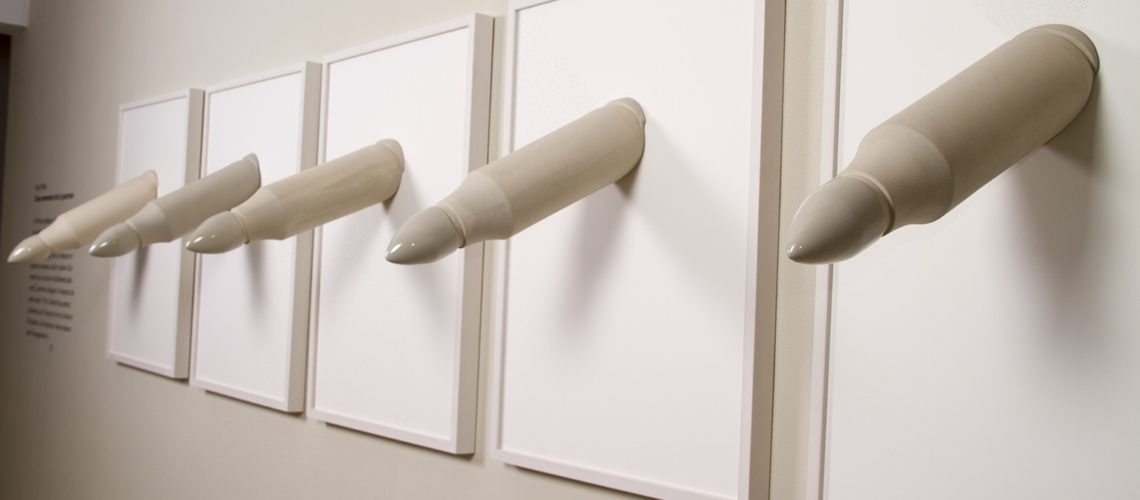
This devil of modern times is embodied in terrorism in all its forms, symbolised by the artist through the five shells on alert that cast a shadow over the five daily prayers.
In the name of religion, terrorists strip themselves of their humanity to join a world guided by instinct alone, where reason has no place. With their hands they caress rivers of blood that taste of wine, in which the murmurs of thousands of dead seem to them to come from the gardens of Eden; with their sex they rape whatever they find, as if by right, as a foretaste of the eternal virgins.
They proclaim themselves guardians of the temple and false missionaries of God, profaning every prayer and reducing it to a futile act. For, out of arrogance and ignorance, in their narrow minds they see themselves as the sole intermediaries and protectors of a religion that is not theirs. An unheard-of sacrilege, to claim for oneself the divinity of a prayer.
The shells, fearsome weapons and symbols of terrorism, defile the prayers without ever managing to stop them. In the shadow, an even more dazzling ray of sunlight shines and a silent rose blooms. The artist subtly conceals his message of hope, so as not to fall into utopia, and delivers a beautiful blend of a reality that can still be changed towards a better world.”
Text: Neila Mhiri